Sylvester Gardenzio Stallone was born on July 6, 1946, in the gritty Hell’s Kitchen neighborhood of Manhattan. He is the eldest son of Jacqueline “Jackie” Stallone, a women’s professional wrestling promoter with Breton-French and Ukrainian-Jewish roots, and Francesco “Frank” Stallone Sr., an Italian immigrant from Gioia del Colle, Italy. Originally, his mother wanted to name him Tyrone after actor Tyrone Power, but his father insisted on Sylvester—a name that would later become synonymous with strength, determination, and cinematic greatness.
Stallone’s entry into the world was marked by complications. A difficult birth caused nerve damage that resulted in partial paralysis on the left side of his face. This condition gave him the slurred speech and signature sneer that would later become iconic trademarks of his film characters. Bullied as a child for his appearance and speech impediment, young Sylvester found solace in bodybuilding and acting, channeling his hardships into passion and purpose.
During his early years, Stallone lived in foster care and boarding homes before reuniting with his family at the age of seven. They moved to Washington, D.C., where his mother opened Barbella’s, the city’s first women-only gym, and his father trained to become a beautician. Despite a turbulent home life—his parents eventually divorced—Stallone remained focused, turning adversity into motivation.
His big break came in 1976 with Rocky, a film he wrote and starred in. The story of an underdog boxer resonated with millions, earning Stallone Academy Award nominations for Best Actor and Best Original Screenplay. He quickly became a household name and solidified his place as an action star with legendary roles in the Rambo and The Expendables franchises.
In 2015, Stallone returned to the Rocky universe with Creed, portraying an older, wiser Rocky Balboa mentoring the son of his former rival. The role earned him his first Golden Globe and another Oscar nomination—nearly 40 years after the original Rocky.
Most recently, Stallone has expanded his legacy to television, starring in Paramount+’s hit crime drama Tulsa King. His powerful performance reminds fans and critics alike that his grit, talent, and presence remain as magnetic as ever.
The “Believe” singer also addressed her anxieties about what the future for trans people will look like in an interview with ‘The Guardian’
Cher might not be “strong enough” to survive another Trump presidency.
Cher, born Cherilyn Sarkisian on May 20, 1946, is an iconic American singer, actress, and television personality. She first gained fame in the 1960s as part of the duo Sonny & Cher, alongside her husband Sonny Bono. Their hit song “I Got You Babe” became a defining anthem of the era.
Cher’s solo career took off in the 1970s, with hits like “Believe,” which showcased her distinctive contralto voice and innovative use of auto-tune. She has won numerous awards, including a Grammy, an Emmy, and an Academy Award for her role in “Moonstruck” (1987). Throughout her career, Cher has been known for her flamboyant style, powerful performances, and ability to reinvent herself across different musical genres and entertainment mediums.
Beyond music and film, Cher is also recognized for her philanthropic efforts and activism, particularly in support of LGBTQ+ rights. Her enduring influence in pop culture and her ability to connect with multiple generations of fans have solidified her status as a legend in the entertainment industry.
Cher’s career spans over six decades, making her one of the most enduring figures in the entertainment industry. After her initial success with Sonny & Cher, she launched a solo career that included numerous chart-topping hits. In addition to “Believe,” other notable songs include “If I Could Turn Back Time,” “Strong Enough,” and “Gypsies, Tramps & Thieves.”
Cher is not only a successful musician but also a talented actress. In addition to her Academy Award for “Moonstruck,” she received critical acclaim for her performances in films like “Silkwood” (1983) and “The Witches of Eastwick” (1987). Her ability to transition between music and acting has set her apart from many of her contemporaries.
Throughout her career, Cher has also been a fashion icon, known for her extravagant costumes and bold style choices. She has influenced trends and inspired countless artists and fans alike.
Cher remains active in the music industry, touring and releasing new music, and she continues to be a powerful presence in pop culture. Her resilience and ability to adapt to changing times have contributed to her lasting legacy.
Cher is also known for her groundbreaking work in music videos, particularly with the release of “Believe,” which helped popularize the use of auto-tune. This song became one of the best-selling singles of all time and marked a significant moment in pop music history.
In addition to her music and acting, Cher has had a successful career in television. She hosted her own variety show, “The Sonny & Cher Comedy Hour,” which showcased her comedic talents and musical performances. Later, she starred in “Cher,” a solo variety show that further solidified her status as a television icon.
Cher has also been involved in various philanthropic efforts, supporting causes such as HIV/AIDS research, education, and women’s rights. Her advocacy work and her outspoken nature have made her a role model for many.
Overall, Cher’s influence extends beyond her artistic achievements; she has become a symbol of empowerment and resilience, inspiring generations of fans with her talent and determination.
Cher is still actively involved in the entertainment industry. She continues to perform in concerts and shows, captivating audiences with her timeless music and dynamic stage presence. In addition to her music career, Cher remains engaged in various projects, including occasional acting roles and ongoing advocacy work for causes she is passionate about. Cher’s enduring popularity and influence ensure that she remains a prominent figure in the world of entertainment
A hurricane is a powerful tropical storm that forms over warm ocean waters. It is characterized by strong winds, heavy rain, and thunderstorms. Hurricanes can cause significant damage due to their high winds, storm surges, and flooding. They are classified into categories based on their wind speeds, with Category 1 being the least severe and Category 5 being the most severe.
The formation of a hurricane typically requires warm ocean water (at least 26.5 degrees Celsius or 80 degrees Fahrenheit), moist air, and a pre-existing weather disturbance. As the storm strengthens, it can develop a well-defined center known as the eye, which is surrounded by a ring of intense thunderstorms called the eyewall.
Hurricanes can have devastating effects on coastal areas, leading to evacuations, property damage, and loss of life. Meteorologists use various tools and models to track and predict the path of hurricanes to help prepare and mitigate their impact.
The history of hurricanes dates back thousands of years, with records of tropical storms and hurricanes noted by various cultures. The term “hurricane” itself comes from the Taino Native American word “hurucan,” which referred to the god of storms.
In the Atlantic, the earliest recorded hurricane was in 1495 when Christopher Columbus encountered a storm in the Caribbean. Over the centuries, hurricanes have been documented in various regions, particularly in the Caribbean and along the eastern coast of the United States.
The 20th century saw significant advancements in meteorology, allowing for better tracking and understanding of hurricanes. The establishment of the National Hurricane Center in the U.S. in 1965 marked a major step in hurricane forecasting and public safety.
Hurricanes have had profound impacts on societies, leading to changes in building codes, emergency preparedness, and response strategies as communities learned to cope with these powerful storms. Today, technology continues to enhance our ability to predict and respond to hurricanes, although they still pose a significant threat to life and property.
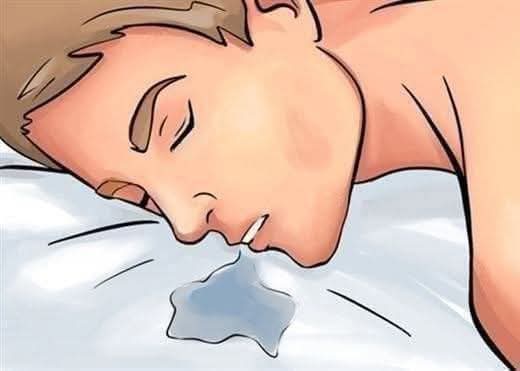
Drooling while sleeping is often a sign that your brain and body are in a deeply relaxed state. This can be associated with various factors, some of which are completely normal, while others may indicate underlying issues that need attention.
1. Deep Sleep and Relaxation
One of the most common reasons for drooling during sleep is that your body has entered a state of deep rest. During REM (rapid eye movement) sleep and other deep sleep stages, your muscles become more relaxed, including those that control your mouth and swallowing reflexes. If your body is in a particularly restful sleep state, you may not swallow as frequently as when you are awake, allowing saliva to accumulate and escape from your mouth. This can actually be a sign of good sleep quality.
2. Sleep Position Matters
Your sleeping position plays a significant role in whether or not you drool. People who sleep on their stomachs or sides are more likely to experience drooling because gravity pulls saliva toward the pillow. In contrast, those who sleep on their backs may experience less drooling, as saliva is more likely to stay in the mouth and be swallowed naturally.
3. Nasal Congestion and Mouth Breathing
If you are experiencing nasal congestion due to a cold, allergies, or sinus problems, your brain may signal your body to breathe through your mouth instead. When this happens, your mouth may remain slightly open throughout the night, increasing the chance of drooling. This is particularly common in individuals with chronic sinus issues or those who suffer from conditions like a deviated septum.
4. Excessive Saliva Production
Some people naturally produce more saliva than others. Certain medications, including those for allergies, depression, or neurological conditions, can increase saliva production as a side effect. Additionally, acid reflux or GERD (gastroesophageal reflux disease) can sometimes trigger excessive saliva production, which might contribute to drooling at night.
5. Neurological and Muscle Control Factors
In some cases, frequent or excessive drooling during sleep may indicate an issue with muscle control or neurological function. Conditions such as sleep apnea, Parkinson’s disease, stroke, or other neurological disorders can affect the ability to swallow efficiently, leading to saliva buildup and drooling. Sleep apnea, in particular, is a condition where breathing is repeatedly interrupted during sleep, which can lead to mouth breathing and increased drooling.
6. When Should You Be Concerned?
While occasional drooling is normal and harmless, excessive drooling—especially if it is new or accompanied by other symptoms like difficulty swallowing, snoring, or interrupted sleep—may warrant medical attention. If you suspect that a condition like sleep apnea or GERD is contributing to the issue, consulting a doctor may be beneficial.
How to Reduce Drooling While Sleeping
If you find that drooling is affecting your sleep or causing discomfort, here are a few tips to minimize it:
Change Your Sleeping Position: Try sleeping on your back to encourage natural saliva swallowing.
Treat Nasal Congestion: Use a humidifier, saline sprays, or allergy medications if congestion is a problem.
Stay Hydrated: Dehydration can thicken saliva, making it harder to swallow.
Check Medications: If you suspect your medication is increasing saliva production, consult your doctor about possible alternatives.
Address Sleep Apnea: If you experience snoring, choking, or frequent awakenings, consider getting tested for sleep apnea.
In summary, drooling while sleeping is usually a sign of deep sleep and relaxation, but it can also be influenced by factors like sleep position, nasal congestion, and saliva production. If it happens frequently and disrupts your sleep, it might be worth exploring potential underlying causes.
At first, it seemed like just a buzzing nest — nothing more. But the real fear was deeper. When my eight-year-old son faced something unknown in the attic, I realized that being a father sometimes means standing up to the fear you can’t see — and the one inside yourself. This is a story about courage, compassion, and what it truly means to protect someone you love… even when you’re scared too.
Sometimes, the peace of an ordinary day isn’t broken by noise — but by silence. That day began exactly like that. Quiet. Peaceful. Calm — like any other sunny afternoon.
My eight-year-old son, Mark, had run upstairs, full of excitement. I had told him stories about an old toy box that was still hidden up in the attic, from his early childhood years. And like any curious child, he was eager to uncover those forgotten treasures.
Just minutes later, I heard a scream — high-pitched, sharp, chilling. I dropped everything and rushed upstairs. When I opened the attic door, I saw Mark huddled in the corner, pale-faced, his small body shaking. His eyes were wide, fixed on a dark corner of the ceiling.
He whispered, barely audible: “Dad… something’s moving up there…”
I held him tightly. His heart was racing against my chest, and I could feel the real fear inside him. I turned my head, slowly following his gaze — and then I saw it.
A shadow. Moving. A dense, pulsing mass shifting in the upper beams. This wasn’t just a child’s imagination. Something was up there. Something alive.
That fear stayed with me, not just that night, but even deeper — it triggered a strange memory. A detail I had dismissed months ago. Back in May, to be exact.
Back then, we were dealing with another kind of problem. Deer had destroyed our garden. They trampled flowerbeds and ripped up hedges. While cleaning up the mess, I noticed a rusty metal box between two trees, hidden near the eastern edge of our property.
At first glance, it looked like an old electrical unit — probably something left behind by the previous owners. I ignored it. Told myself I’d check it out later.
But “later” came sooner than I expected.
A few days after, we hired some gardeners to remove and replace the ruined hedges. They were working near the area where I’d seen the box. Suddenly, one of them shouted: “Hey! You need to come see this!”
I ran over. And what I saw froze my blood.
It wasn’t a box. It was an opening. A breathing, living gateway to something unknown.
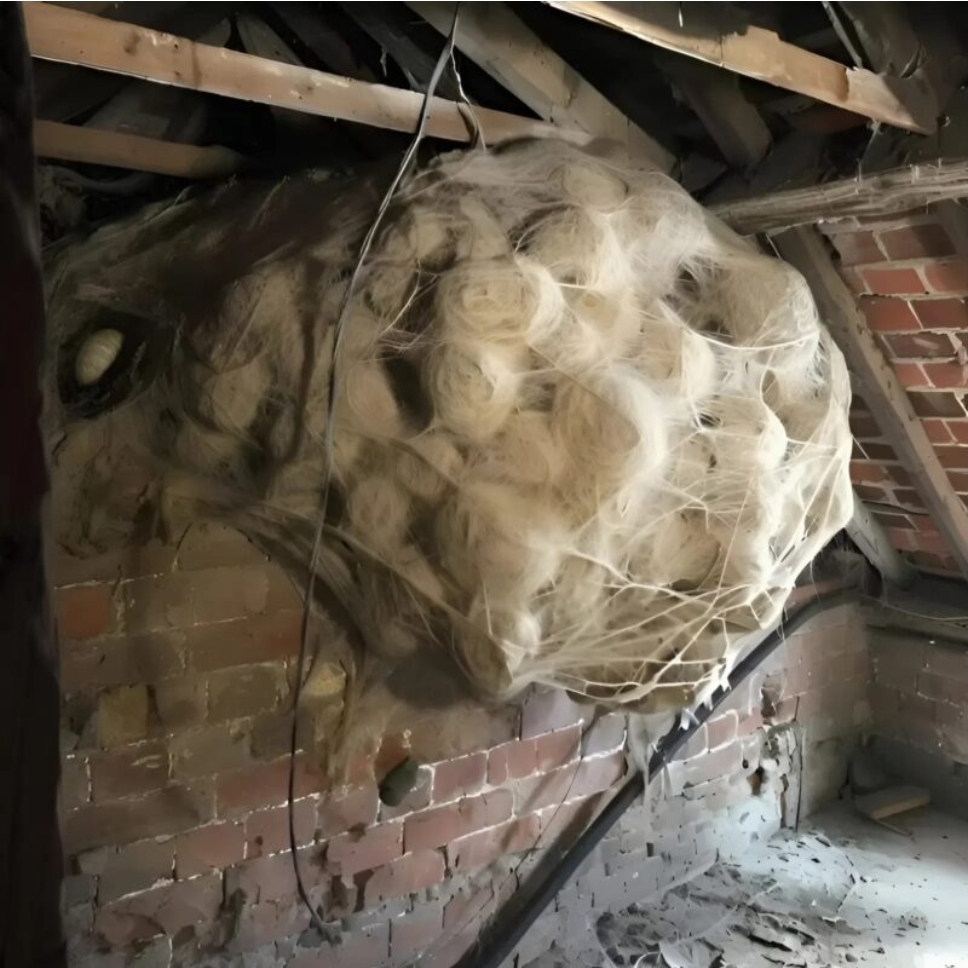
A wasp nest — the largest I had ever seen. Massive. Monstrous. The buzzing sounded like a car engine — loud, constant, unsettling. The air vibrated from it. I felt sick.
We immediately called a pest control specialist. But when he saw the nest lodged between the attic and roof beams, he stepped back and said, “This is too dangerous. I’m not touching it.”
Another expert suggested we wait until winter, when the wasps would be dormant. Wait? How was I supposed to live with that buzzing over our heads, and my terrified son afraid to even look at the ceiling?
That night, I couldn’t sleep. The buzzing invaded my thoughts. Mark’s trembling voice kept replaying. That’s when I made a decision that, in hindsight, still feels surreal.
I would face it myself.
Not because I was brave — far from it — but because I felt trapped. I couldn’t let my son live in fear, and I couldn’t stand the idea of that thing lurking above us every night.
I made myself a ridiculous-looking “protective suit” with layers of clothes, old motorcycle goggles, duct tape, and thick gloves. My hands trembled as I grabbed a flashlight and a small stool. My heart was pounding so loud I could barely hear the buzz.
Just before midnight, I climbed up. The attic was freezing and silent. The flashlight beam cut through the darkness as I stepped forward, the wood creaking louder with every step. Finally, I reached the back wall — and that’s where I saw it.
The insulation was torn, as if something had clawed through it. I expected the nest — and yes, part of it was there. But so was something else. A narrow, unnatural crack in the wood. A tunnel. Or a passage.
I leaned in. The air coming from it was warmer than the rest of the attic. And it smelled… different. Earthy. Metallic. Like something ancient. And then I heard it — faint, deliberate clicking sounds. Not like insects. Rhythmic. Patterned. Intentional.
This wasn’t just a wasp problem. It was something else.
I backed away slowly, heart pounding, unsure if I should scream or cry. Mark’s fear, the buzzing, the shadow — it all made sense now. And yet, none of it did.
Whatever was behind that passage… I wasn’t ready to face it.
And maybe, just maybe, some doors are better left closed.
But that night wasn’t about monsters. It was about choice. It was about love. It was about realizing that when a child is afraid, they don’t need a superhero — they need someone who stays.
I didn’t solve the mystery. I didn’t defeat the shadow. But I held my son. I showed up.
And sometimes, that’s the bravest thing we can do.
Get ready for an unforgettable flavor explosion! These ribs are glazed with a sticky-sweet honey garlic sauce that will have you licking your fingers. The baking method ensures incredibly tender meat that practically falls off the bone.
Honey Garlic Ribs Ingredients:
Ingredient
Quantity
Pork spareribs
4 pounds
Honey
½ cup
Soy sauce
¼ cup
Distilled white vinegar
¼ cup
Brown sugar
2 tablespoons
Garlic, minced
2 cloves
Baking soda
1 teaspoon
Garlic salt
1 teaspoon
Instructions:
Prepare the Ribs:
Slice the ribs into individual pieces.
Make the Sauce:
In a large bowl, combine honey, soy sauce, vinegar, brown sugar, and minced garlic.
Stir until the honey and sugar are completely dissolved.
Stir in baking soda. The mixture will foam.
Coat the Ribs:
Add the ribs to the bowl and turn to coat them evenly in the sauce.
Bake the Ribs:
Line a cookie sheet with foil.
Arrange the ribs meat-side up on the prepared sheet.
Pour any remaining sauce over the ribs.
Sprinkle with garlic salt.
Bake in a preheated oven at 375°F (190°C) for 1 hour, turning the ribs every 20 minutes.
Serve:
Remove from the oven and let the ribs rest for a few minutes before serving.
Enjoy these delicious and easy-to-make honey garlic ribs!
Dogs have a way of greeting one another that might leave you a little uncomfortable — sniffing each other’s rear ends. But when your furry friend turns their…
Dogs have a way of greeting one another that might leave you a little uncomfortable — sniffing each other’s rear ends. But when your furry friend turns their attention to your crotch, it can feel downright awkward.
So, why do they do this?
For anyone who’s ever had a dog, it’s no surprise that dogs communicate and greet others in various ways, with their sense of smell playing a key role. Dogs explore the world through their noses, and their sniffing habits are how they gather important information.
The dog’s superior sense of smell comes from 220 million scent receptors in their nose. That’s about 50 times more than humans have, giving dogs the ability to detect scents that are completely undetectable to us.
Simply put, dogs are incredibly curious creatures, and they have a keen sense of smell that helps them gather information about you.
Dogs are drawn to strong odors, explains Jennifer Sperry, a veterinarian with Pets Plus Us Insurance, tells Rover.com. Crotches, with their sweat glands and unique scent, are like a welcome mat for a dog’s nose. For medium to large dogs, the crotch is also easy to reach — much to the discomfort of your visitors.
Fortunately, there are ways to guide your dog’s curiosity into a more courteous greeting. Keep reading to find out why dogs sniff crotches and how you can redirect this behavior.
Why does my dog sniff crotches?
Ever wondered why your dog can’t resist sniffing your crotch? According to Rover, there are a few key reasons behind this behavior that might just surprise you.
The area is home to apocrine sweat glands, which produce a stronger, more pungent scent than those in other parts of your body. While these glands are also found in places like your armpits and chest, your dog’s nose likely won’t reach those spots.
Moreover, Dr. Sperry points out that dogs tend to target the crotch because it’s a more noticeable scent source compared to other areas, like your hands or feet. So next time your pup gets a little too friendly, remember — it’s all about their keen sense of smell.
Stop dog from sniffing crotches
So, we know that dogs are curious creatures, and when your dog greets a guest by sniffing their crotch, they’re just trying to gather information about them.
But, let’s face it — no one wants a dog’s wet nose in an awkward spot. So, how can you curb this behavior in a way that’s both effective and kind to your furry friend?
1. Redirect, don’t discipline
It might be tempting to scold your dog when they get a little too friendly with a guest, but that can backfire.
Dogs don’t really understand why you’re upset, and it can cause confusion and stress. Instead, try redirecting your dog’s sniffing habits to more appropriate outlets. Here are a few fun alternatives to keep your dog’s nose busy:
Dogs don’t really understand why you’re upset, and it can cause confusion and stress. Instead, try redirecting your dog’s sniffing habits to more appropriate outlets. Here are a few fun alternatives to keep your dog’s nose busy:
Snuffle Mats -Puzzle Toys -Nosework -Sniffer Walks By giving your dog an outlet to indulge their sniffing instincts, they’re less likely to focus on your guests’ private areas.
2. Teach a new trick
A great way to prevent your dog from sniffing your guests’ crotches is by teaching them a more polite greeting.
Dr. Sperry suggests reinforcing the “sit” command as guests walk through the door. This simple trick will keep your dog occupied and prevent awkward moments. You can even teach them a more fun greeting, like a high-five. Here’s how:
Remember, when your dog sniffs your crotch, they’re not being rude — they’re just trying to learn more about you.
If your dog often sniffs between your legs or others’, you can actually see it as a sign that your dog is happy and using its natural senses in a completely normal way! It’s just your dog’s way of exploring the world and gathering information about those they meet.
But if this behavior is making you or your guests uncomfortable, there are ways to redirect that curiosity. The key? Positive reinforcement! By encouraging alternative, polite behaviors, you’ll build a stronger bond with your pup while making sure everyone feels comfortable.
We’ve all done things we’re not proud of in the past, made decisions we wish we hadn’t, and said things we would want to take back.
Yet I’m willing to wager very few of us have regrets so large and visible as Ethan ‘ModBoy’ Bramble, a body fanatic from Australia who covered his body with over 200 tattoos.
Expressing oneself through ink is common these days, while intricate, quirky tattoos appear to be all the rage. That said, there’s a limit to what most people are willing to pay to have put on themselves, and for most people that limit falls well short of what Ethan was ready to do
As per reports, Ethan was just 11 years old when he decided to get his first ever body modification, which involved the stretching of his ears. Since then, he’s undergone all manner of procedures, including having his tongue split and his belly button removed.
It’s his tattoos that garner the most attention, however, and that’s hardly a surprise given that he’s covered head to toe. All told, Ethan revealed that he had spent around $60,000 AUD (roughly $39,000 UD) to look the way he does.
Now, though, he’s expressed some regret over his past choices.
“I guess you could say I regret some tattoos,” he told LadBibleTV’s No Filter series.
“Not just regret, I think there’s a difference between regret and wanting to be perceived differently.”
Ethan went on to say that he’s worried about the judgement he might face while performing certain daily tasks, such as taking his young daughter to school.
“The face is a big thing that can lead to so many – for some people, not everyone – can lead to a lot of problems for yourself, which I probably wouldn’t want my daughter to have to deal with until she was a bit older,” he said.
“I wish that I had not gone as hectic as I did on my face.”
In an attempt to clean up his image, Ethan’s been undergoing painful laser surgery treatment in a bid to reverse some of the ink he got when he was younger.
He explained: “I’ve been getting laser [surgery], or have been, for pretty much 12 months… We do it in sections, but I’ve probably gone over the full thing six or seven times.
“I started getting it done because of the anxiety and stuff I was getting… Mental stuff is a funny thing to pin down, but I want to think that a lot of the anxiety was from just having a face full of tattoos.
“I’m happy with the way that I look, but I’m also happy with the mentality that over the next two years, my face tattoos are going to become less and less and less. I’m just clearing the canvas.”
What do you think about Ethan’s before and after look? Let us know in the comments!
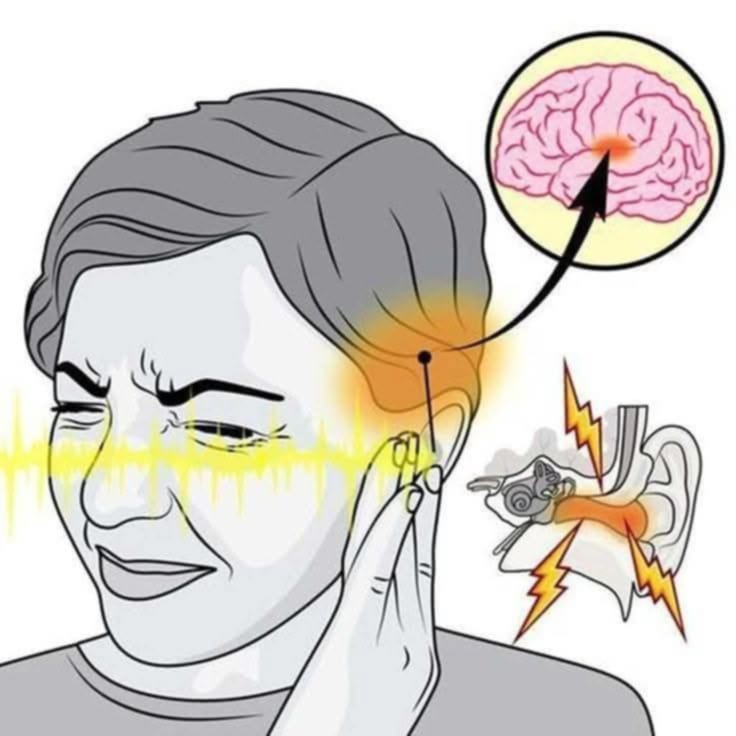
Ringing in your ears can be super annoying, right? It’s called tinnitus, and it can happen for a bunch of reasons, like exposure to loud noises or stress. If it keeps bothering you, it might be a good idea to chat with a professional about it. But hey, let’s focus on something more fun!
So, tinnitus is that ringing or buzzing sound you might hear in your ears, and it can definitely be distracting. Some common causes include being around loud noises, ear infections, or even just stress. It can also be linked to things like age or certain medications.
While it’s usually not serious, if it’s persistent or affecting your daily life, it’s a good idea to see a healthcare professional. They can help figure out what’s going on and suggest ways to manage it
Tinnitus is often described as a ringing, buzzing, hissing, or clicking sound that isn’t caused by an external source. Here are some key points about it:
Types of Tinnitus: There are two main types – subjective tinnitus, which only the person can hear, and objective tinnitus, which can sometimes be heard by a doctor during an examination.
Causes: Common causes include:
Exposure to Loud Noises: Prolonged exposure to loud sounds can damage the hair cells in the inner ear, leading to tinnitus.
Hearing Loss: Age-related hearing loss is a frequent contributor.
Ear Blockages: Wax buildup, ear infections, or fluid can affect hearing and cause tinnitus.
Health Conditions: Conditions like Meniere’s disease, acoustic neuroma, or even high blood pressure can lead to tinnitus.
Medications: Certain medications, especially high doses of aspirin or antibiotics, can have tinnitus as a side effect.
Symptoms: The primary symptom is the perception of sound in the absence of external noise. This can vary in pitch and volume and may be constant or intermittent.
Diagnosis: A healthcare professional may conduct a physical exam, hearing tests, and imaging tests to determine the underlying cause.
Treatment: While there’s no one-size-fits-all cure, treatments can include:
Sound Therapy: Using background noise or white noise to mask the ringing.
Cognitive Behavioral Therapy (CBT): This can help manage the emotional response to tinnitus.
Medications: Sometimes, medications can help reduce the severity of symptoms.
Management: Lifestyle changes like reducing stress, avoiding loud noises, and using hearing protection can help manage tinnitus
Tinnitus can be a sign of an underlying condition, so if it persists, it’s important to seek professional advice.
A sudden, violent tremor ripped through central Colombia late this morning, leaving a trail of devastation from the Andes foothills to the capital. At roughly 10:47 AM local time, a magnitude-6.3 earthquake struck about 80 kilometers southeast of Bogotá, near Villavicencio, its shaking so intense that the ground quivered for nearly forty-five seconds and its roar carried as far as Medellín and Cali.
In downtown Bogotá, one of the most harrowing scenes unfolded when a multi-story red-brick residential tower fractured at its core and pitched perilously over an adjacent building, its cracked balconies and dangling air-conditioning units casting long, jagged shadows across streets littered with concrete and twisted rebar.
First responders rushed to the affected neighborhoods amid clouds of dust and the wail of emergency sirens. Firefighters, paramedics, and volunteers formed human chains to clear mangled debris while heavy cranes and earthmovers clawed through the rubble in search of survivors. Families huddled on sidewalks clutching water bottles and blankets; some wept as they watched rescuers gently pull out children and elderly residents, coughing but miraculously alive. With aftershocks rattling already unstable structures, crews worked in coordinated urgency, guided by the urgent beeps of listening devices trained to detect muffled calls from beneath piles of shattered masonry.
Hospitals in Bogotá and neighboring towns immediately declared emergencies, diverting all available trauma surgeons to treat the influx of injured. Makeshift triage centers sprang up in sports halls and school courtyards, where volunteers wrapped wounds, administered pain relief, and offered warm soup to the displaced. Power lines snapped and water mains ruptured across multiple districts, forcing authorities to deploy portable generators and water tankers. City officials advised residents to boil tap water and to remain outdoors until buildings could be declared safe by structural engineers.
In Villavicencio, closer to the epicenter, farmers abandoned fields still soggy from last night’s rain, fearing the abrupt jolts would trigger landslides on the steep hillsides. Dozens of rural communities reported cracked foundations and collapsed barns, cutting off access roads that rescue convoys labored to clear. The governor’s office dispatched military engineers to reinforce vulnerable slopes and restore communications, while emergency shelters opened in schools and community centers, offering basic hygiene supplies and counseling to traumatized families.
President Duque addressed the nation by midday, promising swift government action and international support if needed. He announced an immediate $50 million relief package for search-and-rescue operations, structural assessments, and temporary housing. “Colombians are no strangers to hardship, but our resilience and solidarity will guide us through this catastrophe,” he declared, urging calm and cooperation. Regional governors and mayors coordinated efforts via video conference, mapping out logistics to deliver food, medicine, and bedding to the hardest-hit zones.
As dusk fell over the scarred cityscape, rescue teams continued probing the fractured building in Bogotá, their headlamps bobbing through dust clouds as they called out into the darkness. Neighbors formed chains to pass debris to the street, where bulldozers carried it away to create access lanes. Children wrapped in emergency blankets clung to parents, soot-smudged but hopeful, while rescue dogs nosed through cracks, ears pricked for signs of life. The air was thick with tension and determination—a testament to human courage in the face of Earth’s unpredictable fury.
With the tremors subsiding, the focus now turns to rebuilding and healing. Engineers will spend days inspecting schools, hospitals, and homes for hidden damage; therapists and community leaders will tend to the emotional wounds of those who lost loved ones. But amid the chaos, stories of bravery and compassion have already emerged: a neighbor who risked his own safety to save an elderly couple, a group of teenagers who organized water distribution for stranded commuters, and countless volunteers clearing roads so ambulances could pass. In the shadow of destruction, Colombia’s spirit shines bright—undaunted, united, and determined to rise again